 Log In






Energy is one of the biggest running costs for UK SMEs.
If you’re signing a new lease, renewing a contract, or trying to cut overheads, your business energy contract matters more than you think.
This guide explains:
- How electricity contracts for business work.
- How to set up a new business electricity supply.
- How to switch suppliers.
- What to budget for.
- How to avoid expensive rollover traps.
Let’s take a look.
Setting up a new business electricity supply
Moving into a new office, shop, or unit? One of your first jobs is setting up an energy contract.
When you take over a property, the gas and electricity will usually still be connected. But you’ll often be placed on expensive deemed or out-of-contract rates. These are default energy tariffs that allow you to continue access to gas or electric without a negotiated contract. As such, they often cost significantly more than standard commercial electricity contracts (both fixed and variable rates) due to supplier risk.
In 2026, deemed electricity rates for small businesses average around 35p per kWh, compared with under 25p per kWh for many fixed contracts. That’s a significant premium for not having a formal agreement in place.
Many deemed tariffs now operate as rolling 28-day contracts, with businesses often paying 20-50% more than market rates due to the supplier’s increased risk, so be sure to act quickly.
Step 1: Take meter readings
On the day you move in:
- Take a clear photo of your electricity and gas meters.
- Record the readings.
- Keep them on file.
This protects you from being billed for the previous tenant’s usage.
Step 2: Find your current supplier
You need to know who currently supplies the premises.
- For electricity, you will need your MPAN (Meter Point Administration Number).
- For gas, you will need your MPRN (Meter Point Reference Number).
Your landlord may have this information. If not, your regional network operator can help.
Step 3: Choose your tariff
Business energy contracts are different from domestic ones. There’s usually:
- No cooling-off period.
- Fixed contract terms.
- Early exit fees.
You will choose:
- Contract length.
- Fixed or variable pricing.
- Electricity only, or gas and electricity.
Switching quickly can save you thousands over the contract term.

Setting up an energy contract is one of the first things a business owner should do when moving to a new office
Minimum contract terms and tariff types
Many new founders ask: what is the minimum contract term for business electricity tariffs?
Unlike home energy, most business electricity contracts lock you in for one to five years.
Here’s how it usually works:
Contract length | What it means |
1 year | Short commitment, often slightly higher rates |
2–3 years | Most common for small businesses |
4–5 years | Longer stability, but less flexibility |
The longer the contract, the more you are exposed if market prices fall.
There’s rarely a grace period – once you sign, you’re committed. Always check the renewal terms before signing.
Beware the rollover trap
Many small firms overpay because they miss their renewal window. Here’s how it happens:
- Your contract ends.
- You do not give notice.
- The supplier automatically rolls you onto a new contract.
- Rates may increase by 20% to 40%.
This is known as a rollover contract.
To avoid it, all you have to do is:
- Check your contract end date.
- Note the notice period (often 60–120 days before renewal).
- Compare quotes early.
- Serve notice in writing.
Before you read any further: put the date in your calendar today.
If your contract lapses, you’ll usually be moved onto deemed rates from day one. These charges are legally enforceable, even without a signed agreement, and can add noticeable costs in a short time.
The good news is switching off deemed rates is immediate once you agree a new contract – so acting quickly can make a real difference.
How to switch business energy suppliers (step-by-step)
Switching business energy is easier than many owners think. Here’s how:
1. Check your renewal date
Make sure you’re within your notice window.
2. Gather your details
You will need:
- MPAN or MPRN
- Annual usage (kWh)
- Current rates
3. Compare quotes
Get at least three quotes from suppliers or brokers.
4. Agree your new contract
Review unit rates, standing charges, and contract length.
5. Confirm notice with your current supplier
This should usually be done in writing.
6. Switch
The process normally takes two to six weeks, but supply won’t be interrupted.
How to switch business energy suppliers by sector
Energy needs will vary depending on your industry. Here’s what to consider.
Accountancy and office businesses
Offices tend to have:
- 9-to-5 usage.
- Predictable electricity demand.
- Low gas consumption.
So, a fixed-rate standard tariff often works well. If you’re running an accountancy firm or professional services business, focus on:
- Competitive unit rates.
- Flexible contract length.
- Online account management.
Commercial landlords
Landlords may deal with:
- Multiple meters.
- Vacant units.
- Communal area supply.
You may need:
- Multi-site contracts.
- Separate billing structures.
- Careful tracking of renewal dates.
If units sit empty, you could be stuck paying deemed rates, so be sure to switch quickly when tenants leave.
Trade businesses
Trade firms, such as builders or workshops, often use:
- Heavy machinery.
- Three-phase electricity.
- Higher peak usage.
You may require:
- Half-hourly (HH) meters.
- Specialised commercial electricity contracts.
- Capacity checks.
Always confirm your maximum demand before signing.


Get our newsletter!
Sign up to receive the latest advice, insights and tips.
Budgeting for commercial electricity contracts
If you’re setting up a new professional service firm, you may be wondering what to budget each month. Costs will depend on:
- Square footage.
- Number of employees.
- Equipment use.
- Heating type.
- Opening hours.
Here’s a rough guide to average UK annual electricity use:
Business size | Typical annual usage (kWh) |
Micro (1–9 staff) | 5,000–15,000 kWh |
Small (10–49 staff) | 15,000–50,000 kWh |
Medium (50–249 staff) | 50,000–100,000+ kWh |
Energy budgeting in 2026 requires extra care. Several regulatory and network changes mean non-energy costs now make up a bigger portion of business bills.
From April 2026, electricity standing charges for many UK businesses are expected to increase significantly due to higher network costs. These are usually passed through to customers, even on contracts advertised as “fixed.”
This means your monthly bill could still rise if these pass-through charges increase.
Gas usage varies widely depending on heating and insulation.
To estimate your monthly bill:
- Multiply annual kWh by your unit rate
- Add the daily standing charge
- Check for pass-through costs such as network charges
- Divide by 12
Always ask suppliers for an itemised quote so you can see what portion of your bill is energy versus additional charges.
Fixed vs variable contracts
Fixed contracts | Variable contracts |
Lock in unit rates | Rates can rise or fall |
Provide price certainty | More flexibility |
Protect against market spikes | Higher risk |
In volatile markets, fixed contracts offer stability – though pass-through charges can still affect your final bill. Always compare carefully to make sure you’re getting the right deal for your business.
What affects business energy prices?
Suppliers will price your commercial energy contract based on factors such as:
- Business size
- Location
- Credit rating
- Meter type
- Industry sector
- Wholesale market prices
Improving your credit profile can help you secure better terms.
In addition, from 2026, a few additional factors are playing a bigger role in pricing:
- Rising network charges passed through in standing costs
- Policy levies included in electricity pricing
- Higher deemed-rate benchmarks for businesses without contracts
Suppliers build these into quotes, which makes comparing options early even more important.
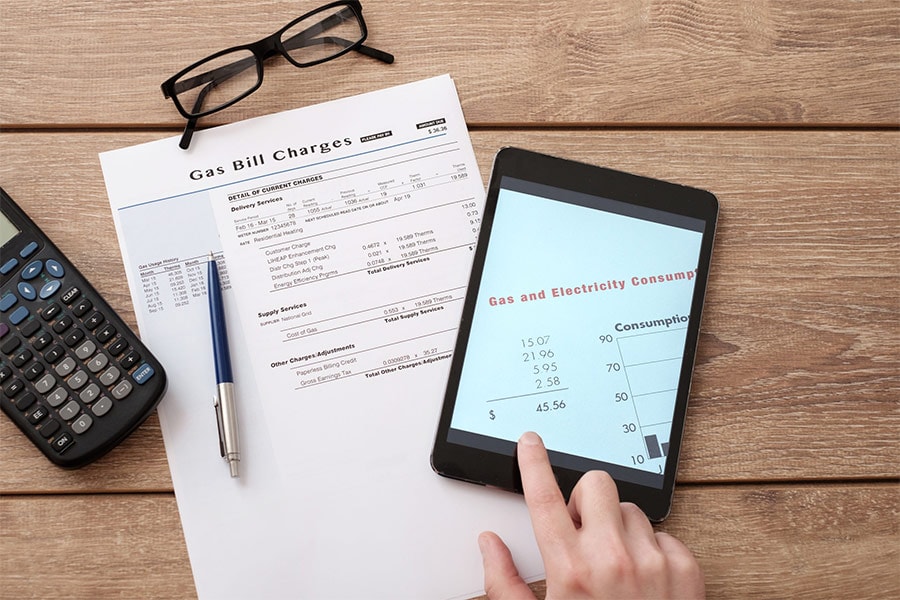
Businesses should seek out the lowest energy prices from highly rated suppliers
Managing cash flow through winter energy bills
Switching suppliers is the best long-term solution. But what if:
- You’re stuck on a high tariff?
- Prices spike in winter?
- You face a sudden seasonal cash flow squeeze?
Energy bills often rise when cash is already tight.
Spreading the cost of high winter utility bills can protect working capital and prevent disruption. A Fleximize working capital loan could help you:
- Smooth seasonal energy costs.
- Avoid late payment fees.
- Protect supplier relationships.
- Keep operations running.
Switching saves money long term. But short-term support can give you breathing room when you need it most.
Check your funding options today and see how Fleximize could support your business.
In summary
Electricity contracts for business are not something to leave on autopilot. To stay in control:
Take meter readings when you move in.
- Avoid deemed rates.
- Watch your renewal window.
- Compare quotes early.
- Understand your contract term.
Energy is a major cost. But with the right approach, it’s one you can manage.
Stay proactive, stay organised, and keep your cash flow protected.
Your common questions answered
A corporate electricity contract is simply a business energy agreement tailored to commercial use.
Unlike domestic deals, these contracts are usually fixed-term, have no cooling-off period, and may include higher usage thresholds, multi-site options, or bespoke pricing.
Most switches take between two and six weeks. Your electricity supply to business premises won’t be interrupted during the process, so you can switch with confidence.
You can – but there’s usually a catch. Most business utility contracts include early exit fees. It’s often best to wait until you’re within your renewal window before switching, unless the savings outweigh the cost of leaving early.
If you don’t arrange a contract, you’ll be placed on deemed rates.
These are typically much higher than standard commercial tariffs, so setting up an energy contract for your business early can save you a significant amount.
Yes. Even if the electricity supply to business premises is already active, you’ll need to set up your own contract. Otherwise, you’ll automatically pay out-of-contract rates.
Fixed contracts lock in your rates for the full term, giving you predictability. Variable contracts can go up or down with the market, offering flexibility but less certainty. Most SMEs prefer fixed deals for easier budgeting.
To switch smoothly, you’ll usually need:
- MPAN or MPRN
- Annual energy usage
- Current supplier and rates
Having this ready speeds up the process and helps you get accurate quotes.
Yes – especially if you go through a broker or compare multiple quotes. Suppliers often price business utility contracts based on risk and usage, so it’s worth shopping around rather than accepting the first offer.
A rollover contract happens when you don’t act before your current deal ends. Your supplier automatically renews you – often at higher rates. Setting reminders ahead of your renewal date helps you avoid this.
Start with your estimated annual usage, multiply by your unit rate, add standing charges, then divide by 12. This gives you a rough monthly figure and helps you plan cash flow more effectively.
Accountancy firms usually have predictable, low-intensity usage. Focus on fixed-rate contracts with competitive unit pricing and strong online account management. Switching is straightforward and often cost-effective due to stable demand.
If you manage multiple sites, look for suppliers offering multi-site or portfolio contracts. Keep track of each meter and renewal date to avoid costly rollover terms across properties.
Landlords should act quickly when units become vacant. Without an active tenant contract, you could be charged deemed rates. Consider flexible or short-term agreements to cover gaps between tenants.
Office-based businesses benefit from predictable usage patterns. Compare fixed contracts with clear pricing and prioritise suppliers with simple billing and digital account tools.
Trade businesses often have higher and more variable usage. Check whether you need a half-hourly meter and confirm your maximum demand before signing. Specialist tariffs for heavier usage may offer better value.
Do you have a question that you can't see? Check out our FAQ page.

How to Save Money on Your Business’ Utility Bills
— Read More — How to Save Money on Your Business’ Utility BillsHow to Save Money on Your Business’ Utility Bills
Kelly Ivison, Managing Director of Exchange Utility, outlines how SMEs can save money on their business utility bills

6 Ways Your SME Can Become Carbon Neutral
— Read More — 6 Ways Your SME Can Become Carbon Neutral6 Ways Your SME Can Become Carbon Neutral
If you're concerned about your business' carbon emissions, here are six ways to help your business become more environmentally-conscious

Mistakes to Avoid When Upscaling Your Business
— Read More — Mistakes to Avoid When Upscaling Your BusinessMistakes to Avoid When Upscaling Your Business
It's important to consider how to scale up your business without compromising customer experience, product quality and value for money. Huw Moxon of Informi explores.


These cookies are set by a range of social media services that we have added to the site to enable you to share our content with your friends and networks. They are capable of tracking your browser across other sites and building up a profile of your interests. This may impact the content and messages you see on other websites you visit.
If you do not allow these cookies you may not be able to use or see these sharing tools.